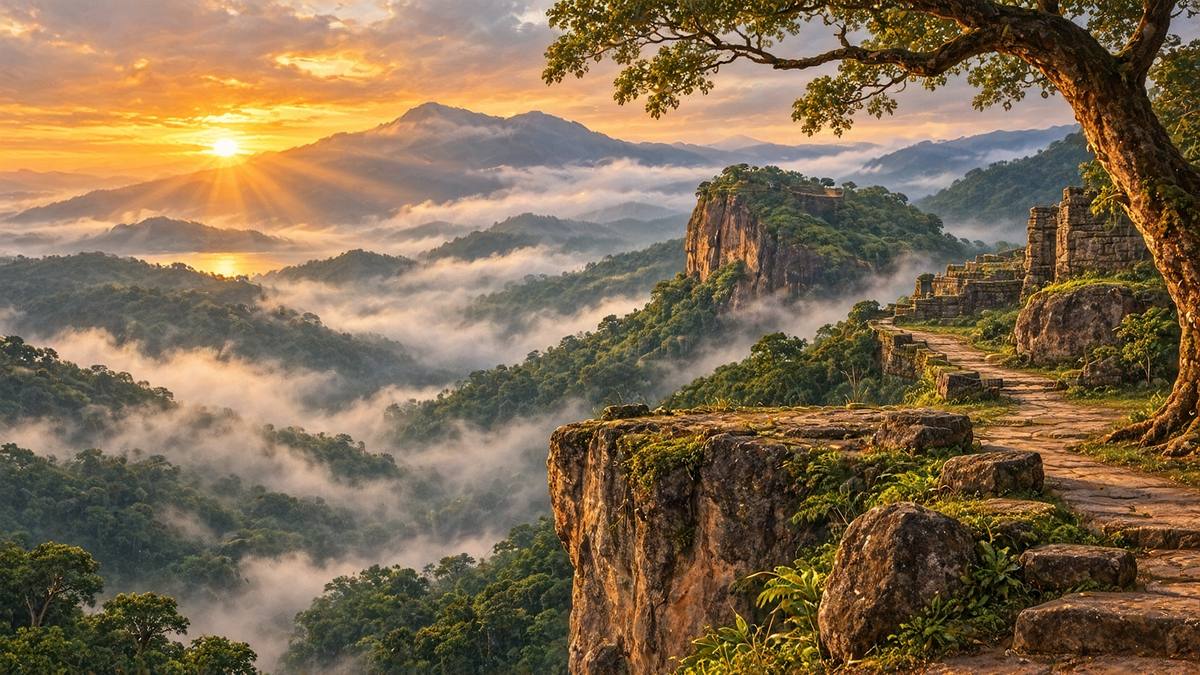
We have already visited six places where the Ravana story meets the land of Lanka. But the Sri Lanka Tourism Development Authority’s ‘Ramayana Trail’ brochure alone lists more than twenty. In this article we visit seven of them most closely tied to Ravana and his family — from Trincomalee to Galle. Every one of them is also on the travel map.
Kanniya — hot wells born for a mother
🗣️ In folkloreRemember the story of Koneswaram? To let his ailing mother worship Shiva, Ravana tried to lift the temple, rock and all. The next part of that story is at Kanniya.
🗣️ In folkloreAccording to folklore, after Ravana’s mother died, water was needed for her last rites. Ravana struck the earth with his sword in several places, and from each one a hot spring burst forth. That is why Tamil Hindus still come to Kanniya to perform rites for their departed — a remembrance of what a son did for his mother.
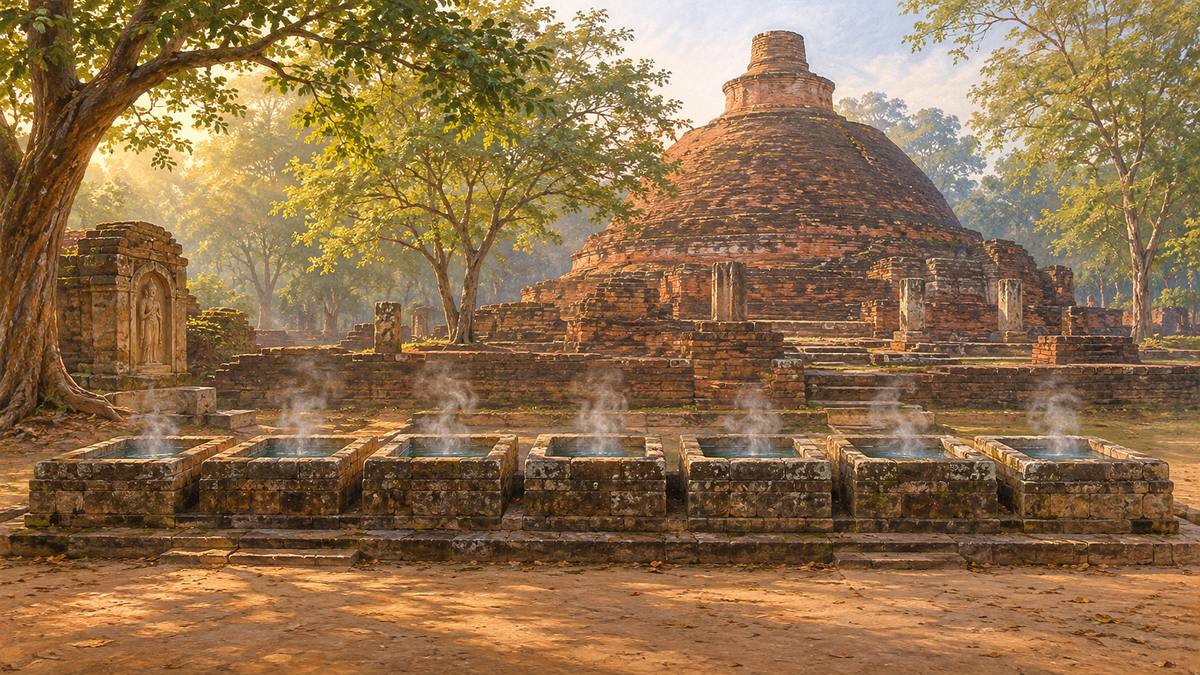
🏺 Evidence existsAbout 10 km from Trincomalee, beside the Trincomalee–Anuradhapura road, there are seven wells laid out in a square. Each is only 3–4 feet deep, and you can see the bottom. The surprise is that each well is a slightly different temperature. After 10–15 buckets a well runs dry, then soon fills again.
🏺 Evidence existsRecent excavations uncovered an early Anuradhapura-period stupa mound and an inscription from about the 1st–2nd century CE. It says the waters of five nearby tanks were reserved for monks living at a monastery here. In 2011 the site was gazetted as a protected archaeological monument.
Seven small wells, a Buddhist monastery, Hindu rites and a story of a son’s love for his mother — Kanniya shows how Lanka’s heritage is woven together.
📖 Read the full story: Places — Where the Story Meets the Land
Ketheeswaram — the temple built by Mandodari’s father
🗣️ In folkloreA beautiful story is told about Ketheeswaram temple at Manthai, near Mannar. It says the temple was built by Maya, king of Manthai, to worship Shiva. Maya was the father of Mandodari, queen of Lanka — Ravana’s father-in-law.
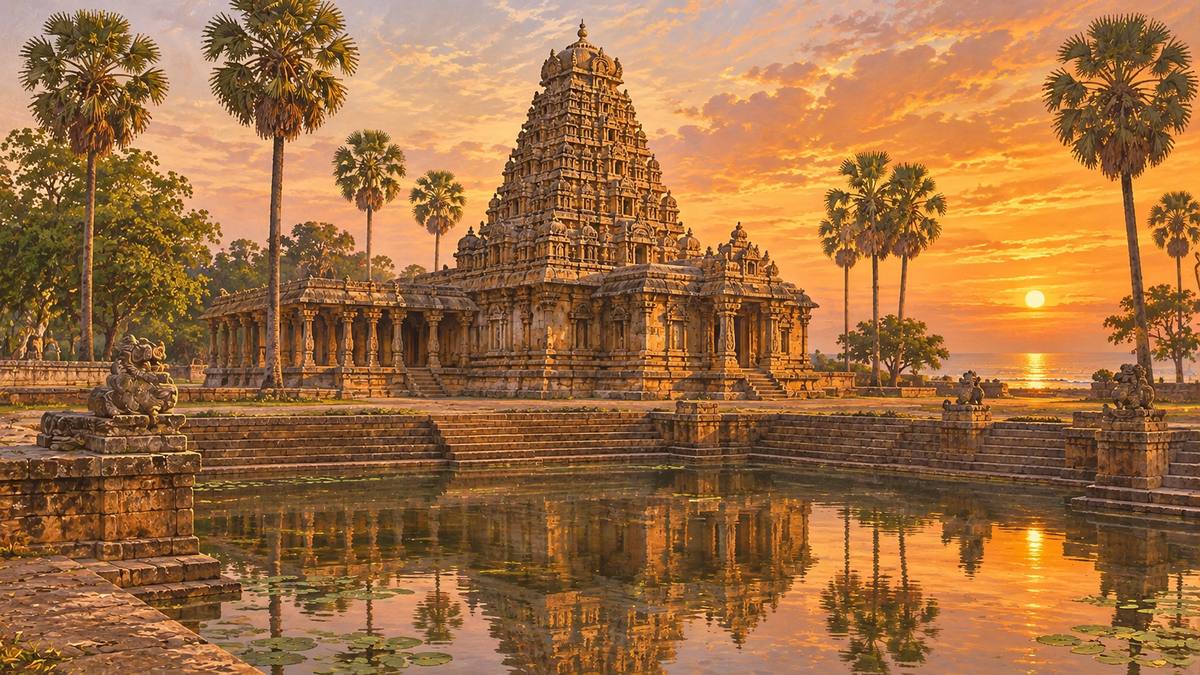
🗣️ In folkloreAnother tradition says it is one of the places where Rama installed a Shiva linga after the war. One temple, linked both to Ravana’s family and to Rama.
🏺 Evidence existsKetheeswaram is one of the oldest Shiva temples in Sri Lanka. Both the 7th-century poet Sambandar and the 8th-century poet Sundarar praised it in their Tevaram hymns. It is one of the 275 Shiva temples (Paadal Petra Sthalams) honoured in those hymns across India and Sri Lanka.
🏺 Evidence existsIn the late 16th century the Portuguese destroyed the temple and used its stones to build Mannar Fort and a church. Three centuries later, in 1894, the old site was found again. The present temple was built in the early 20th century, and its ancient ‘Palavi’ temple tank was restored in 1949.
Like Koneswaram, a temple that rose again after being destroyed — and in its story, the name of Mandodari’s father lives on.
📖 Read the full story: Mandodari — the Wise Queen of Lanka
Sita Kotuwa and Gurulupotha — Mandodari’s palace
🗣️ In folkloreIn the jungle near Gurulupotha on the Kandy–Mahiyangana road lies a place called Sita Kotuwa — “Sita’s fort”. Folklore says this is where Queen Mandodari’s palace stood. When Ravana brought Sita to Lanka, he kept her here first, before moving her to the Ashoka grove.
🗣️ In folkloreThe name of the nearby village Gurulupotha means “parts of birds”. Because of that name, a folk tale grew that this was where Ravana’s Dandu Monara aircraft were repaired.
🏺 Evidence existsThe site lies at the foot of the hill country’s eastern escarpment, below the 18 hairpin bends where the A5 road drops into the Dumbara valley. In a jungle clearing there are the stone foundations of two buildings, two guard stones, and scattered pillars and slabs. Close by is a small limestone cave with stalactites and stalagmites.
❓ DebatedOne source dates the guard stones to the late Anuradhapura period, which suggests the ruins of a Buddhist monastery or another building. Either way, there is no marked path, so go with a local guide from Gurulupotha.
Lakegala — “the Rock of Lanka”
🗣️ In folkloreThree stories are told of Lakegala, rising above Meemure village in the Knuckles range. One says Ravana’s capital Lankapura stood around this rock. Another says Rama’s army was first seen approaching from its summit. The third says Ravana’s Dandu Monara took to the sky from here.
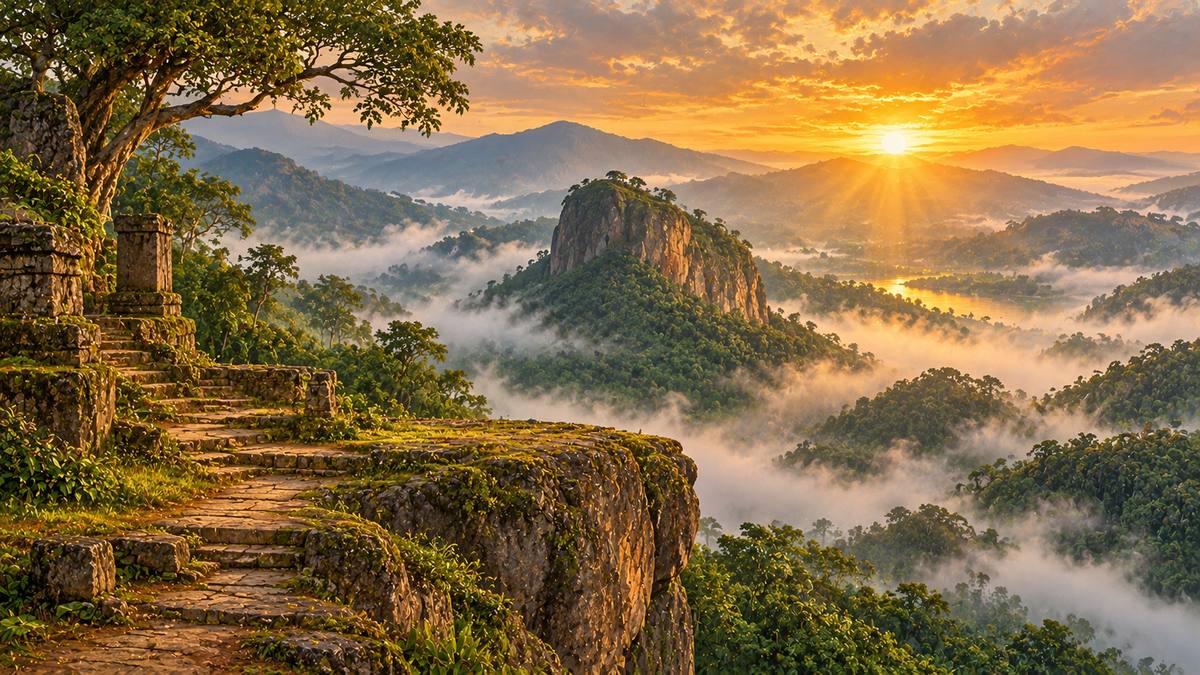
🏺 Evidence existsThe name Lakegala is understood to mean “the Rock of Lanka”. It rises about 1,255 m above sea level (a local account gives 1,319 m). One face of this eroded monolith drops almost vertically for about 900 m. Locals also call it ‘Dumbara Mitiyawatha’.
🏺 Evidence existsMeemure is one of the most remote villages in Sri Lanka, reached over the hills from Hunnasgiriya on the Kandy–Mahiyangana road. Climbing Lakegala is hard, and a guide is essential.
❓ DebatedMany places claim to be the site of Lankapura. Lakegala is one of the most beautiful of them — and looking at that mountain, it is not hard to imagine a king’s fortress.
📖 Read the full story: The Pushpaka Vimana — A Land That Dreamed of Flight
Horton Plains — Thotupola Kanda and World’s End
🗣️ In folklore“Thotupola” is the Sinhala word for a landing place or harbour. Because of that name, folklore says Thotupola Kanda, Sri Lanka’s third-highest peak, was one of Ravana’s airports.
🗣️ In folkloreThere is a story about nearby World’s End too. It says Rama and Lakshmana were hidden in the underworld below this cliff, and Hanuman rescued them. In some tellings this was done by Ahiravana, a relative of Ravana.
🏺 Evidence existsThotupola Kanda is 2,357 m high, and an easy 1.5 km path from the Horton Plains road leads to the top. Horton Plains National Park is part of the Central Highlands of Sri Lanka, a UNESCO World Heritage Site since 2010.
Standing at the edge of World’s End, looking down through the mist, you understand why people long ago thought the drop led to the underworld. Go early — by midday the mist closes in.
Gayathri Peedam — Meghanada’s sacrifice
🗣️ In folkloreThe story of Gayathri Peedam (Sri Lankatheeswarar temple) in Nuwara Eliya is about Ravana’s son Meghanada (Indrajit). Folklore says he did penance to Shiva here and performed the Nikumbhila sacrifice. It is said that the power of that sacrifice made the Trimurti — Brahma, Vishnu and Shiva — appear.
📖 In literatureIn the Ramayana, the Nikumbhila sacrifice was a rite Meghanada performed before battle to become unconquerable. Lakshmana stopped it. The Tourism Authority’s brochure names this as the place where that happened.
🏺 Evidence existsThe present temple was founded by Swami Murugesu, known as Gayathri Siddhar. After a Shiva linga brought from India was consecrated here in the 1970s, the temple became known as ‘Sri Lankatheeswarar’. It is about 2 km from the Nuwara Eliya bus stand, on Lady McCallum’s Drive.
📖 Read the full story: Family — Those Closest to Ravana
Rumassala — the mountain Hanuman brought
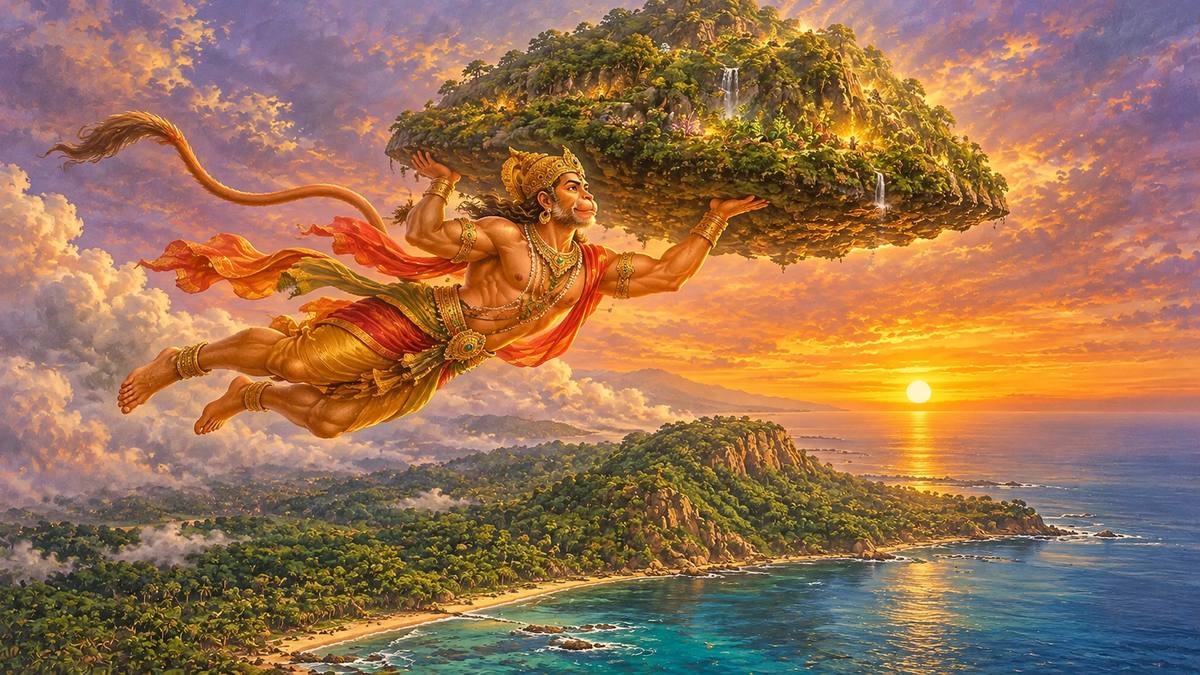
📖 In literatureIn the Ramayana, when Lakshmana was gravely wounded in battle, Hanuman was sent to the Himalayas to fetch healing herbs. Unable to tell which herbs were needed, Hanuman carried back the whole mountain.
🗣️ In folkloreFolklore says Rumassala hill, at the end of Unawatuna near Galle, is a piece that fell from that mountain. That is why villagers believe rare medicinal plants grow here. Similar stories are told of Ritigala and Dolukanda.
🏺 Evidence existsToday the white Peace Pagoda built by Japanese monks stands on Rumassala. In the hill’s scrub jungle and nearby marshes you can see rare birds such as the lesser whistling duck and the black bittern. Coral reefs lie in the sea at its foot.
A journey along the Ravana Trail
Seeing all 13 places from these two articles takes you around Lanka. Grouped by region:
Hill country (Nuwara Eliya–Ella): Gayathri Peedam, Seetha Amman temple, Hakgala, Divurumpola, Horton Plains, Ravana Cave and Ravana Falls. A two-day trip.
East (Trincomalee): Koneswaram and Kanniya. Both in one day.
Knuckles and Dumbara: Sita Kotuwa and Lakegala. Jungle walks, with a guide.
South and north-west: Rumassala, Ussangoda, Ketheeswaram, Sigiriya and Kelaniya.
Tap the “👑 Ravana story” filter on the travel map to see all these places on one map. If your village has another Ravana story, it belongs on this trail too.
Sources
- Ramayana Yathra brochure — Sri Lanka Tourism Development Authority
- Kanniya Hot Springs — Wikipedia
- Ketheeswaram temple — Wikipedia
- Lakegala — Wikipedia
- Gurulupotha Sita Kotuwa — Amazing Lanka
- Sita Kotuwa (cave) — Grottocenter / Grotto Map
- Swami Murugesu (founder of Sri Lankatheeswarar temple) — Wikipedia
- Sri Gayathri Peedam, Sri Lankatheeswarar — Wandering Heritager
- Horton Plains National Park — Wikipedia
- Central Highlands of Sri Lanka — UNESCO World Heritage
- Rumassala — Wikipedia