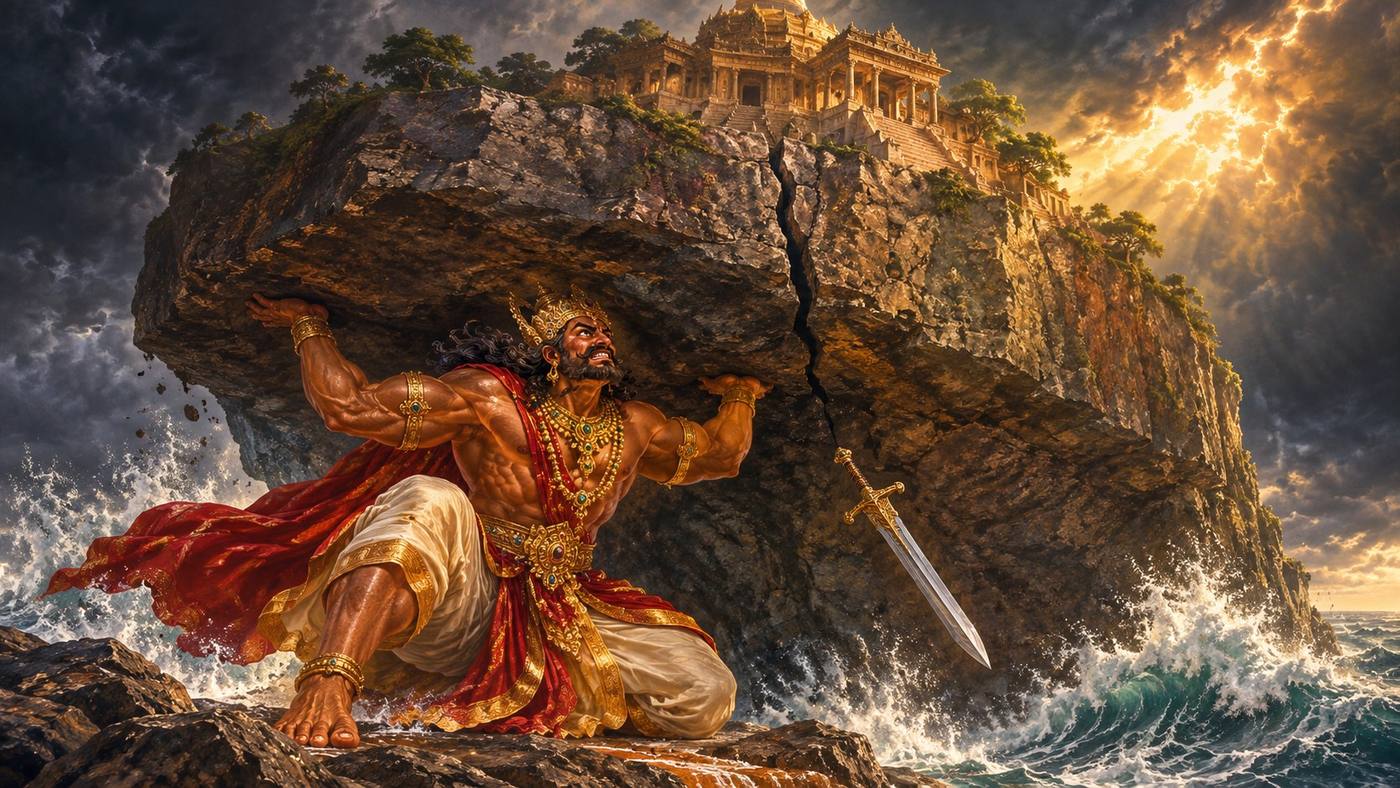
Say the name Ravana and a king comes to mind — powerful, learned, devoted to his land. Thousands of stories about him lie scattered across epics, villages and temples. Here they are, gathered in one place.
Family
📖 In literatureRavana was the eldest son of the sage Vishrava and Kaikesi. His grandfather was the sage Pulastya, one of the ten Prajapatis, the mind-born sons of Brahma. Born of a line of sages on his father’s side and of the rakshasas on his mother’s, Ravana carried both learning and power.
📖 In literatureHis brothers were Kumbhakarna and Vibhishana, his sister Shurpanakha, and his half-brother Kubera, god of wealth. His queen was Mandodari. His son Meghanada defeated even Indra and so earned the name “Indrajit”.
Lord of Lanka
📖 In literatureRavana and his brothers performed penance at Gokarna for 10,000 years. Pleased, Brahma granted Ravana a boon: no god, danava, yaksha or naga could kill him.
📖 In literatureWhen asking for the boon, Ravana did not mention humans — they were no threat to him. At the end of the story, it is a human, Prince Rama, who defeats him.
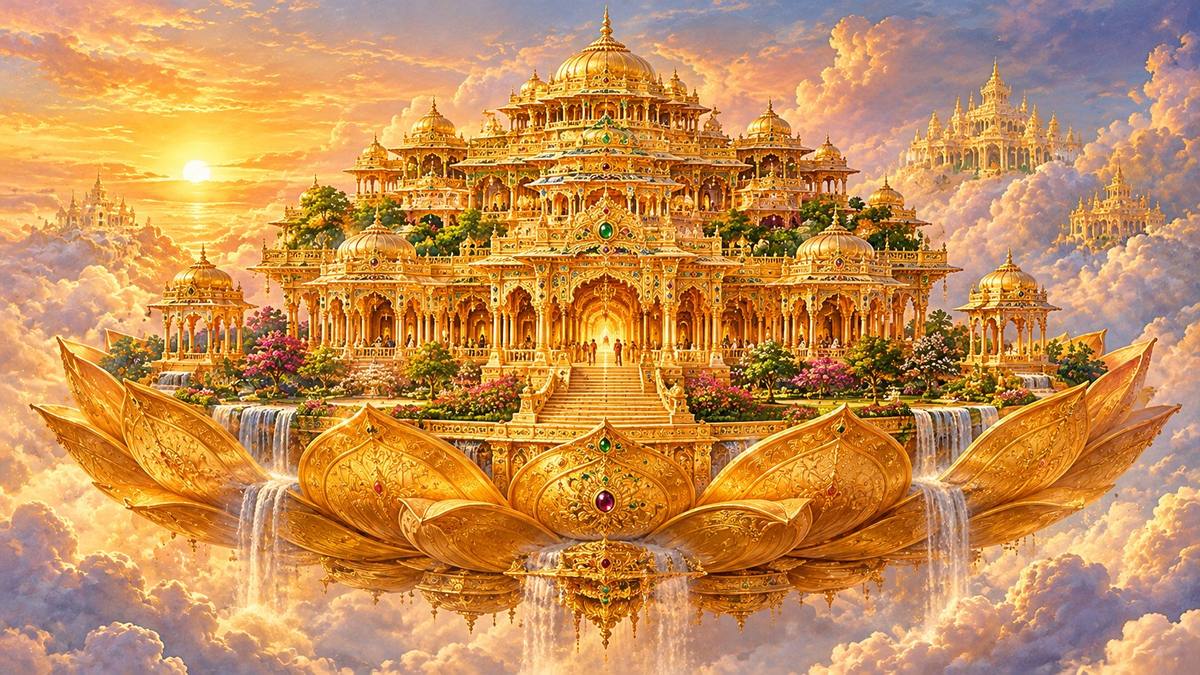
📖 In literatureLanka was first ruled by Kubera. When Ravana claimed it, Kubera left on his father’s advice. Later Ravana defeated Kubera and won the sky-going Pushpaka Vimana.
Scholar, musician, devotee
📖 In literatureRavana is said to have mastered the six shastras and the four Vedas. The Shiva Tandava Stotra, a hymn in praise of Shiva, is attributed to him. In the story, his greatest strength is not his body but his knowledge.
📖 In literatureSome tellings say that, trapped beneath Mount Kailasa, Ravana made a veena from his own head and arm and sang to Shiva.
🏺 Evidence existsAncient carvings of this scene, called Ravananugraha, survive in India. More than a thousand years ago, artists already saw Ravana as a musician.
🗣️ In folkloreThe Ravanahatha, a bowed string instrument, is believed to have been made by Ravana. It is still played in Rajasthan, India.
❓ DebatedSeveral works on medicine and astrology, such as the Ravana Samhita and the Arka Prakasha, are attributed to Ravana. Whether he wrote them is hard to say, but they show how for centuries people saw him as a symbol of knowledge.
Sita and the great war
📖 In literatureLakshmana cut off the nose of Ravana’s sister Shurpanakha. To avenge her, Ravana brought Rama’s wife Sita to Lanka.
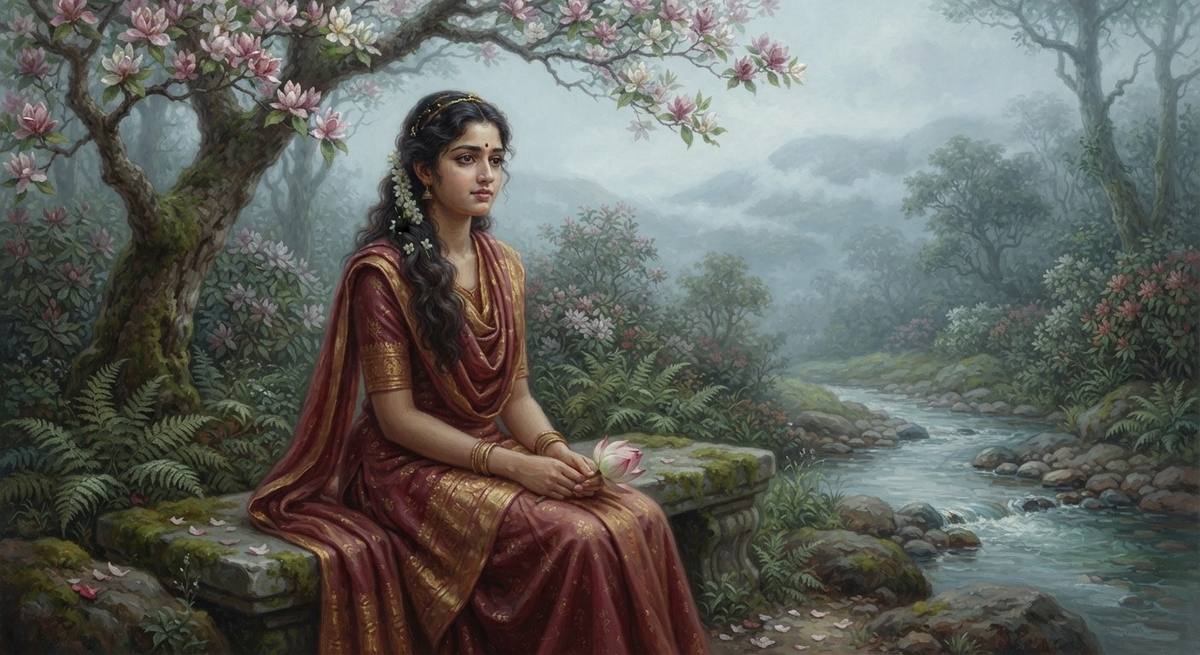
📖 In literatureHe kept Sita in the Ashoka grove and waited for her consent. He never forced her. The story says an earlier curse bound him: if he forced an unwilling woman, his head would shatter.
📖 In literatureVibhishana urged Ravana to return Sita. When Ravana refused, Vibhishana joined Rama. A great war followed. Sons and brothers fell one by one, and at last Ravana fell too.
📖 In literatureYet in Valmiki’s Ramayana itself, Rama tells Vibhishana to give Ravana funeral rites with honour — with death, enmity ends. Even his enemy honoured him.
Ravana around the world
📖 In literatureIn Thailand’s Ramakien, Ravana is “Thotsakan”, the ten-necked king. In Thai dance drama he wears a green face.
📖 In literatureIn Laos, Ravana stands out even more than the heroes. In Cambodia, the battle of Lanka is carved on the walls of Angkor Wat.
📖 In literatureIn Jain Ramayanas, it is Lakshmana, not Rama, who kills Ravana. In 1946 the Tamil poet Pulavar Kuzhandai wrote Ravana Kaviyam with Ravana as its hero. The book was banned, and the ban was lifted in 1971.
🏺 Evidence existsCommunities such as the Gonds in India still honour Ravana. In 2019 Sri Lanka named its first satellite Raavana-1.
Ravana in Sri Lanka
❓ DebatedThe Mahavamsa (5th–6th century CE), Sri Lanka’s oldest chronicle, never mentions Ravana. That may be because it was written as a Buddhist history.
📖 In literatureLater, the Sanskrit Janakiharana, written in Sri Lanka, told the Rama–Ravana story. Still later works such as the Ravana Rajavaliya tied Ravana’s kingdom to the hills, villages and rivers of this country.
🗣️ In folkloreRavana’s brother Vibhishana is worshipped today as a guardian god of Sri Lanka. There is a Vibhishana shrine at the Kelaniya Raja Maha Viharaya.
The Ravana story did not come to us from a book alone — it came from villages, temples, and mothers telling their children. It is ours.